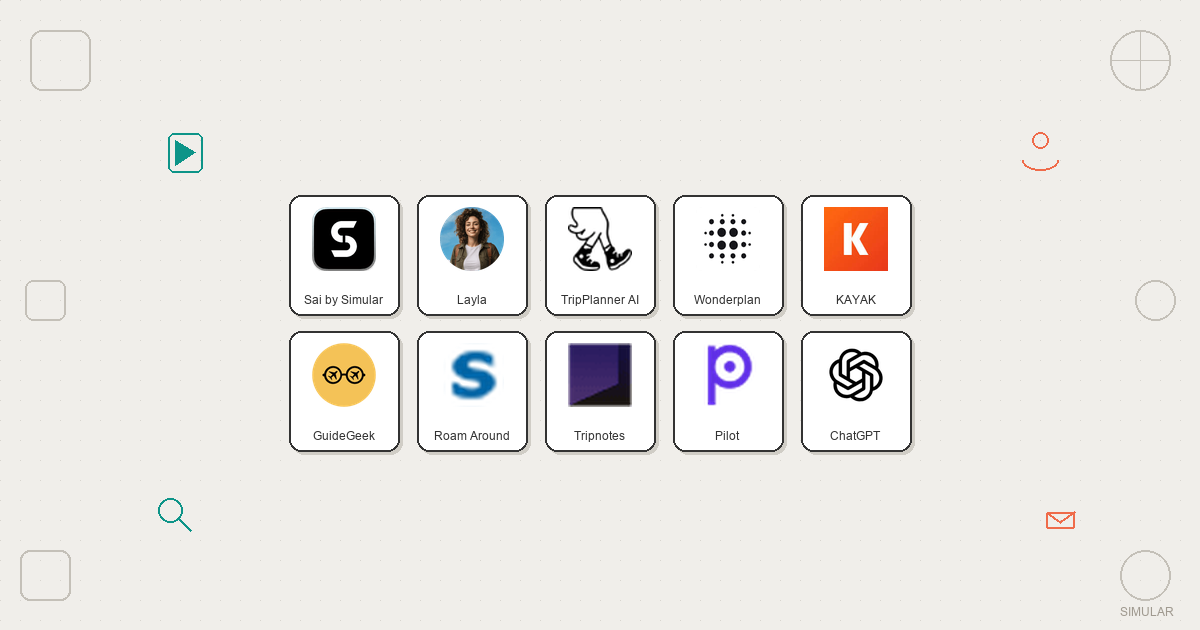
Top Best AI Travel Planner Alternatives for Teams & SMBs

April 27, 2026

Top Best AI Travel Planner Alternatives for Teams & SMBs

The first time you let an AI plan your trip, it feels a bit like handing your passport to a stranger in a crowded station. Will it get you there faster, or send you to a café that does not exist in a town that never was? For many founders, agency owners, and marketers, that is exactly what using the "best" AI travel planner has felt like: flashes of magic wrapped in a lot of double-checking.

Over the last two years, a wave of tools has promised to turn a single prompt into a perfect itinerary: flights sequenced, hotels booked, restaurants reserved. Some, like the services critiqued by Bella Darden in her essay on what AI gets wrong about travel planning (Mindholiday), have delivered poetic but unreliable suggestions. Others have strayed into pure fiction, inventing destinations or attractions that do not exist, as reported by the BBC in its piece on the perils of AI-planned trips (BBC Travel). And yet, when done well, agentic tools can genuinely remove hours of research and admin from your week, as Wired found when they let AI agents handle a full vacation workflow (WIRED). In this guide, we will look past the hype to what actually works.

This article is for people who live in calendars and CRMs as much as they live in departure lounges: business owners bundling client offsites, agencies coordinating photoshoots across borders, sales teams threading meetings through conference schedules. We will break down what "best AI travel planner" really means in practice, where pure browser-based tools fall short, and why desktop-grade computer agents are becoming the quiet superpower behind the most efficient teams.

How we evaluated

To separate shiny demos from real leverage, we tested the best AI travel planner tools and their top alternatives the same way you would use them in a busy workweek: under pressure, with messy constraints, and with other tasks competing for your attention.

Our evaluation focused on:

  • Real-world prompts
    We reused complex, multi-leg scenarios inspired by iMean AI's multi-city benchmark and Thrifty Traveler's Lapland test: multiple travelers, flexible dates, routing constraints, and specific lodging preferences.
  • Execution depth vs. pretty prose
    We looked at whether tools actually produced bookable options (with links, prices, and times) rather than vibe-heavy city guides or hallucinated attractions.
  • Dimensions we scored
    • Ease of use: onboarding friction, UI clarity, editability of plans.
    • Pricing: free tiers, paid seats, and scalability for teams.
    • Autonomy: from static suggestions to agents that can click, type, and operate interfaces.
    • Surface area: browser-only vs full desktop (email, spreadsheets, internal tools).
    • Ideal for: solo travelers, small teams, or operations-heavy orgs.
    • Reliability: rate of obvious hallucinations; need for manual verification.
  • Desktop vs. browser capability
    Some tools are essentially smart search boxes constrained to a browser. Others, like Simular Pro, run as autonomous computer agents on a virtual desktop, able to coordinate flights, invoices, and internal approvals in one continuous workflow. We scored higher when AI could integrate travel planning into the rest of your business operations instead of living in its own silo.

Comparison Summary

ProductPricingKey AdvantagesAutonomous Agent?Ideal ForFull Desktop Tasks?
Simular ProUsage-based business plans; contact sales for teamsHighly capable computer-use agent, runs on secure cloud desktop, production-grade workflows across travel, sales, opsYes, with human-in-the-loop guardrailsAgencies, revenue teams, ops leaders automating end-to-end travel + back-office tasksYes, full desktop (apps, files, terminals, browser)
iMean AIFree tier; paid plans for advanced featuresExcellent multi-city, multi-person browser planning, strong flight and hotel search with real-time pricesPartially (autonomous in browser only)Travel-intensive teams needing optimized itinerariesNo, browser-based only
MindtripFreemium; subscription for premium featuresRich visual itineraries, maps and activity planning, good for day-by-day trip structureNo, mostly guided suggestionsCreators, consultants, planners who value polished itinerariesNo, browser and mobile app scope
WonderplanFree planner; may add paid tiersSimple, free AI trip planning with offline PDF export and easy reordering of plansNo, recommendation-focusedBudget-conscious users needing quick starting itinerariesNo, browser-only
LaylaFree chat; paid subscriptions for extrasConversational UI, good local suggestions, integrated maps and dining picksNo, chat assistantSolo travelers and small groups planning simpler tripsNo, primarily browser and mobile

1. Simular Pro – The Best Desktop-Grade Alternative To Any “Best AI Travel Planner”

Most AI travel planners live inside a browser tab. Simular Pro lives on a full computer.

Simular’s agent (Sai) behaves like an always-on co-worker who happens to live in a private cloud desktop. It clicks, types, navigates GUIs, opens your booking portals, updates your CRM, reconciles invoices in Excel, and drafts follow-up emails in Gmail or Outlook. Under the hood, it blends large language models with symbolic planning to deliver production-grade reliability across thousands of steps.

For a business, that matters. Booking travel is rarely a stand-alone task. It sits inside workflows: getting approvals, matching trips to client contracts, logging costs to the right project, updating pipelines, and notifying teams.

With Simular Pro you can:

  • Have Sai search flights in your preferred tools, compare options, and paste shortlists into a shared sheet.
  • Auto-generate itineraries for a sales roadshow, then sync meetings into your calendar and CRM.
  • Pull receipts from email, rename PDFs, and file them into the correct cloud folders.

Every action is transparent: you see the exact sequence of steps, can inspect or modify them, and add guardrails for critical operations. Pricing is designed for teams and enterprises; you pay for real work done, not just for chat.

If you want an AI that plans travel and does the surrounding admin on a real desktop, Simular Pro is the strongest alternative to traditional “best AI travel planner” tools.

2. iMean AI – A Specialist For Complex Browser-Based Itineraries

iMean AI is one of the most capable browser-first travel planners on the market. In benchmark tests, it handled a notoriously tricky scenario: four friends, four departure cities, flexible dates, and a multi-city route across Central and Eastern Europe. It synchronized arrivals, minimized backtracking, and produced concrete flight and hotel tables you could actually book.

Pros

  • Excellent at multi-city, multi-person routing with clear trade-offs on price vs. timing.
  • Integrates flight search, route planning, and hotel suggestions in a single browser UI.
  • Ideal when your main goal is “give me an optimized plan I can book today.”

Cons

  • Lives in the browser: it does not log into your accounting tools, CRMs, or HR systems.
  • Still requires you to click through and finalize bookings manually.

Pricing

iMean offers a free tier plus paid upgrades for power users and teams. For details, check the official site, as plans evolve frequently.

If your bottleneck is designing the right route and timing for complex team trips, iMean is a strong complement to Simular: Simular can execute the cross-app workflow, while iMean can generate the initial routing logic.

3. Mindtrip – Cinematic Itineraries, Less Focus On Operations

Mindtrip approaches the problem like a designer: rich visuals, maps, and hour-by-hour breakdowns. Reviewers who tested multiple tools found Mindtrip excelled at crafting daily schedules, suggesting cafés and attractions, and plotting everything on an interactive grid.

Pros

  • Beautiful, structured itineraries that are easy to share with clients or teams.
  • Helpful for aligning expectations: “Here is what our three days in Tokyo will actually feel like.”
  • Mobile app plus desktop experience keep everyone synced.

Cons

  • Weaker on logistics like multi-origin flights or detailed booking flows.
  • Prone to occasional hallucinations (e.g., suggesting hotels that no longer exist), so everything needs verification.
  • Not built to touch your internal business stack.

Pricing

Mindtrip uses a freemium model with premium subscriptions for advanced features and export options. Check their pricing page for current tiers.

For agencies and creators, Mindtrip pairs nicely with Simular: let Mindtrip shape the client-facing narrative of a trip, then let Simular’s agent handle the grunt work of bookings, documentation, and internal approvals across your desktop tools.

4. Wonderplan – Lightweight, Free, And Great For Drafts

Wonderplan brands itself as a free AI trip planner that helps you “craft unforgettable itineraries.” In practice, it is a fast way to generate a first draft: a list of cities, suggested day splits, and notable attractions, with the option to export everything as a PDF for offline use.

Pros

  • Completely free at the time of writing; perfect for quick exploration.
  • Simple interface: you type a prompt, get a plan, and reorder or prune stops on a single page.
  • Offline PDF export is handy when you are traveling or sharing with clients.

Cons

  • Focuses on ideas, not execution: it will not go log into airline portals or booking tools.
  • Limited control over advanced constraints (e.g., syncing multiple travelers, expense policies).
  • No awareness of your business context or connected apps.

Pricing

Wonderplan is currently free, with hints that paid tiers may come later. That makes it a low-risk sandbox for brainstorming.

For business owners, Wonderplan is best treated as a research scratchpad. Once you have an outline, Simular Pro can translate it into concrete tasks on your desktop: draft calendar holds, booking checklists, and expense workflows that actually match how your company runs.

5. Layla – Chat-First Trip Planning For Simpler Scenarios

Layla leans into a conversational interface. It feels like texting a travel-savvy friend: you describe your vibe and constraints, and it replies with routes, hotels, restaurants, and local events. In independent tests, Layla shined for inspiration and neighborhood-level recommendations.

Pros

  • Natural, fast chat experience; easy for non-technical users.
  • Good at surfacing quirky local festivals, cafés, and cultural spots.
  • Integrated maps and restaurant suggestions make it handy for city breaks.

Cons

  • Treats many prompts as if one person is traveling, even when a group is involved.
  • Weak at coordinated, multi-origin itineraries and strict date windows.
  • Offers PDFs and richer exports only on higher-priced subscriptions.

Pricing

Layla provides a free chat tier, with paid plans unlocking premium exports and features. Pricing changes, so check the official site before committing.

For small teams doing occasional offsites or retreats, Layla can provide a quick sense of what to do on the ground. To turn that into an end-to-end workflow — approvals, bookings, notifications, reimbursements — Simular’s desktop agent is the missing operational layer.

6. Other Notable Options – And Why Desktop Agents Matter

Beyond these five, there is a long tail of AI travel helpers:

  • General chatbots like ChatGPT, Claude, or Gemini, sometimes paired with Kayak or other plugins.
  • Expedia’s Trip Matching inside social apps.
  • Points-aware tools like Gondola that optimize loyalty redemptions.
  • Inspiration-first sites that curate experiences rather than logistics.

Each has its strength: some excel at real-time price scanning, others at squeezing value from points, others at pure storytelling. But they all share the same constraint: they live next to your work, not inside it.

Simular Pro is different. It is not “another best AI travel planner.” It is an autonomous computer agent that treats travel as one more workflow it can own across email, browsers, spreadsheets, booking portals, and internal tools. That is why teams use it to:

  • Prepare multi-city trips for sales, then update deals and tasks automatically.
  • Coordinate agency shoots, including flights, hotels, per diems, and file organization.
  • Handle the long tail of admin that normal travel planners never see.

If your goal is to save time and reduce cognitive load, the winning setup is often a hybrid: use a specialized browser planner when you need deep route optimization, and let Simular Pro execute everything around it on a secure, always-on desktop. When you are ready to experience what that feels like, you can explore more and try it for yourself at https://www.simular.ai/.

Stop doing repetitive tasks. Let Sai handle them for you.

Sai is your AI computer use agent — it operates your apps, automates your workflows, and gets work done while you focus on what matters.

Try Sai

FAQS