
Oops! Something went wrong while submitting the form.
The average blog post takes 4 hours and 10 minutes to write (Orbit Media Studios Annual Blogging Survey, 2024) -- and that number has climbed steadily for a decade. For content marketers managing an editorial calendar, the real bottleneck is not the writing itself. It is everything surrounding it.
TL;DR
AI blog writing tools fall into three categories, and understanding the distinction matters more than any individual feature comparison:
The seven tools below span all three categories. We tested each one by producing a real 2,500-word blog post on the same topic and evaluating research depth, draft quality, SEO compliance, and total time-to-publish.
Every tool on this list was evaluated through the same hands-on process: we produced a real 2,500-word blog post on the topic "best project management tools for startups" using each tool, then measured the results across five dimensions.
Our testing methodology:
We did not accept sponsorships, affiliate arrangements, or early access from any tool vendor. Sai by Simular is our own product, and we note this transparently. The rankings reflect our genuine assessment of each tool's performance across these five dimensions.
What it is: Sai is an AI agent that runs directly on your computer. Unlike browser-based writing tools, Sai controls your actual desktop and browser -- opening tabs, navigating websites, extracting data, and producing complete blog articles through a multi-step automated workflow.
What makes it different for blog writing:
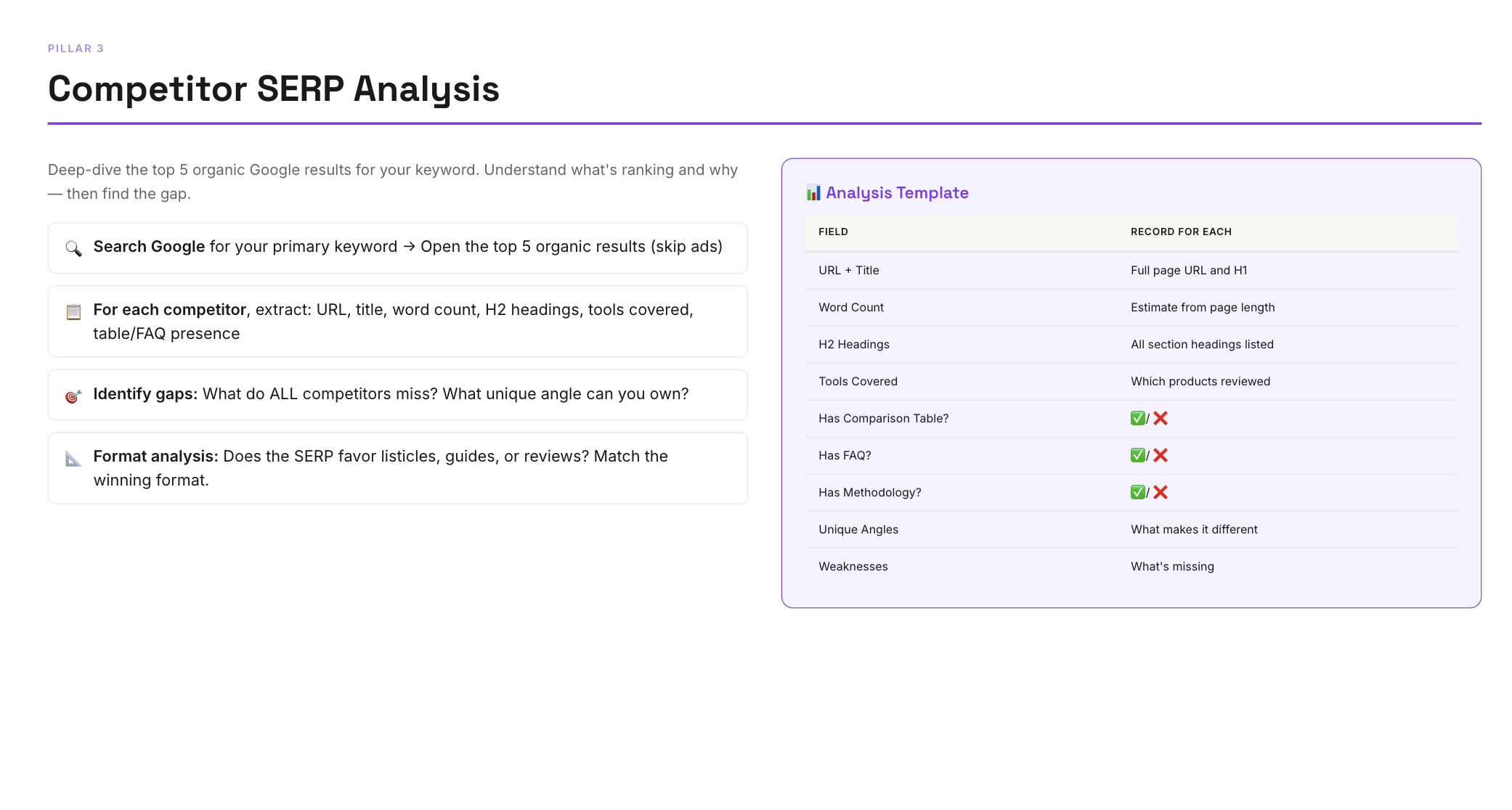
Sai does not ask you to paste a prompt and wait for output. You tell it "write a blog post about [topic]" and it executes a full production pipeline:
Best for: Content marketers, startup GTM teams, and solo founders who need to publish 2-4 high-quality blog posts per week without hiring a writing team. Particularly strong for teams already using Sai for market research or meeting scheduling, since the blog workflow connects to those existing pipelines.
What it is: Jasper is an AI content platform designed for enterprise marketing teams. It offers brand voice training, campaign workflows, and template libraries across multiple content types.
Strengths: Strong brand voice consistency across team members. Campaign-level content planning. Integrations with Google Docs, Webflow, and most CMS platforms. The "Brand IQ" feature trains the AI on your existing content so outputs match your tone.
Limitations: Expensive for individuals ($49-125/month). Does not perform its own research -- you still supply the brief, data points, and competitive context. No native SEO scoring; requires a separate tool like Surfer or Clearscope. No GEO optimization features.
Best for: Marketing teams with 3+ writers who need consistent brand voice across a high volume of content. Less suited for solo operators or technical content that requires deep research.
Pricing: Creator plan from $49/month; Pro from $69/month; Business custom pricing.

What it is: Surfer analyzes top-ranking pages for your target keyword and provides a real-time content score as you write. It tells you how many times to use specific terms, how long your article should be, and how many headings to include.
Strengths: The most data-driven SEO scoring in the market. The Content Editor shows a live score from 0-100 as you type. SERP Analyzer breaks down exactly what top-ranking pages have in common. Integrations with Google Docs and WordPress.
Limitations: It optimizes content but does not create it from scratch. You still need to write (or use another AI to draft). The scoring can lead to formulaic content if followed too rigidly. Pricing starts at $99/month, which is steep for occasional bloggers. No GEO or AI-citation optimization.
Best for: SEO specialists and content teams who already have writers but need data-driven optimization to improve rankings. Pairs well with a drafting tool like ChatGPT or Jasper.
Pricing: Essential from $99/month; Scale from $219/month.
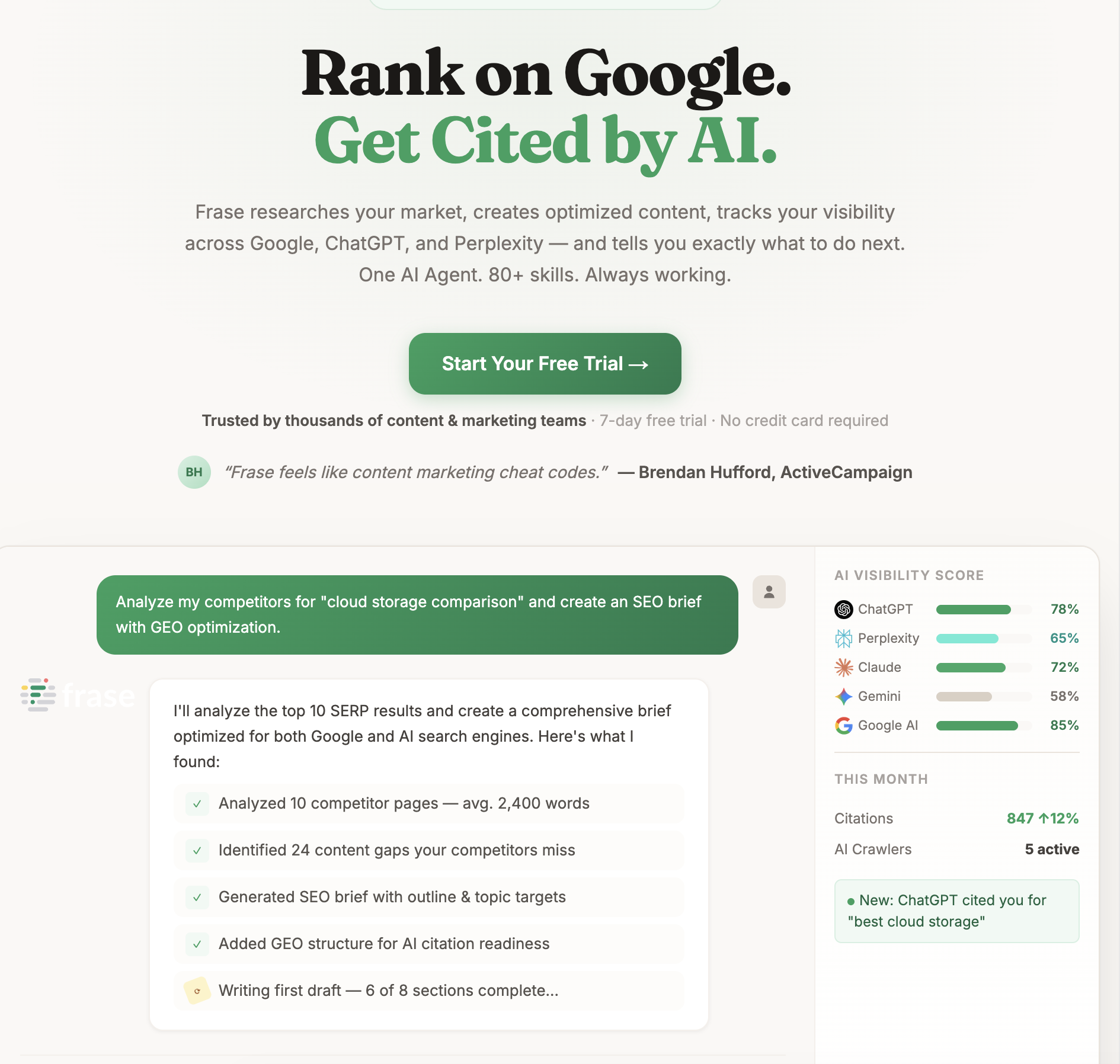
What it is: Frase automates the research and briefing phase of blog writing. It analyzes search results for your keyword and generates a structured content brief with recommended headings, questions to answer, and statistics to cite.
Strengths: The fastest way to go from keyword to content brief. The "Research" panel shows what every top-ranking page covers. AI-generated outlines include People Also Ask questions and related topics. More affordable than Surfer ($15-115/month).
Limitations: The AI writing quality is functional but generic -- it produces serviceable drafts that need heavy editing to sound human. SEO scoring is less granular than Surfer. No image generation, no GEO optimization, and no integration with broader marketing workflows.
Best for: Content strategists who want to speed up the briefing process. Bloggers who prefer to write themselves but want a research-backed outline to start from.
Pricing: Solo from $15/month; Basic from $45/month; Team from $115/month.
What it is: Copy.ai is an AI writing tool focused on speed. It generates blog outlines, introductions, and full drafts from minimal input. The workflow engine lets you chain multiple generation steps together.
Strengths: Extremely fast -- a 1,500-word draft in under 2 minutes. The workflow feature automates multi-step generation (outline then draft then meta description). Good variety of templates. Free tier available.
Limitations: Draft quality requires significant editing. The tool prioritizes speed over depth -- outputs tend to be surface-level and lack original data or analysis. No SEO scoring. No research automation. Blog writing examples from Copy.ai often need substantial reworking before publication.
Best for: Marketers who need a quick starting point and are comfortable with heavy editing. Good for social media copy, ad copy, and email drafts alongside blog content.
Pricing: Free plan available; Pro from $49/month.
What it is: Writesonic offers AI article generation with built-in fact-checking through its "Article Writer 6.0" feature, which references Google search results while generating content.
Strengths: The fact-checking layer is unique -- it cites sources inline as it writes. GPT-4o integration for higher quality outputs. The most affordable paid plan among dedicated AI writing tools. Includes basic SEO meta tag generation.
Limitations: Fact-checking occasionally misattributes sources or cites secondary sources instead of originals. Article depth is adequate for informational content but falls short for comparison guides or data-heavy posts. The interface can be overwhelming with too many content types and templates.
Best for: Freelance bloggers and small businesses that need decent AI writing at a low cost. Good for producing informational blog posts at volume.
Pricing: Free trial; Individual from $16/month; Standard from $79/month.
What it is: OpenAI's ChatGPT with GPT-4o access, web browsing, code execution, and file analysis capabilities. Not a dedicated blog writing tool, but the most flexible AI writing assistant available.
Strengths: The highest raw writing quality of any AI model. Web browsing for real-time research. Can analyze competitor articles if you paste them in. Custom GPTs let you create specialized blog writing workflows. The broadest range of writing styles and tones.
Limitations: No blog-specific features -- no SEO scoring, no content briefs, no competitor analysis automation. Every session starts from scratch unless you build custom instructions. You are the workflow engine -- ChatGPT generates what you ask for, but you manage the entire pipeline manually. No GEO optimization guidance.
Best for: Experienced writers who want a powerful drafting partner and know exactly what to ask for. Best paired with a dedicated SEO tool like Surfer or Frase.
Pricing: Plus at $20/month; Pro at $200/month.