Top Best alternatives best ai for b2b lead generation SMBs

April 27, 2026

Top Best alternatives best ai for b2b lead generation SMBs

The first time your inbox filled up overnight with demo requests, it felt like magic. Then you opened your CRM the next morning and realized half the “leads” were junk, and your team was still stuck exporting CSVs, copy‑pasting into sequences, and chasing ghosts. The promise of AI lead generation was more pipeline with less work. The reality, for many B2B teams, has been more tools and the same late nights.

That’s why “best ai for b2b lead generation” needs a clearer definition. At its core, this category covers tools that use machine learning and automation to find, score, and engage prospects so your sales and marketing teams can focus on conversations, not spreadsheets. Platforms like Amplemarket, ABM suites such as Demandbase, and free stacks highlighted by Leadpages all lean on AI to interpret intent signals, enrich contact data, and trigger outbound at scale. The upside: less manual prospecting, richer context, and faster handoffs. The trade‑offs: data gaps, browser‑only limits, and the risk of over‑automating your way into low‑quality “AI‑generated” leads that never convert.

In this guide, we’ll look at the top alternatives to the usual “best ai for b2b lead generation” suspects—especially if you’re a founder, agency owner, or revenue leader who wants real pipeline, not dashboards. We’ll compare classic browser tools to full computer agents that can actually operate your desktop, and unpack when you need a copilot vs a truly autonomous coworker.

How we evaluated

When we evaluate the best ai for b2b lead generation tools and their alternatives, we don’t just read feature pages—we run them like a revenue team would.

We built a handful of repeatable GTM scenarios (outbound prospecting, event follow‑up, and churn‑risk winbacks) and asked each platform to execute as much of the workflow as possible. Then we scored tools across five dimensions:

  • Ease of use: Onboarding time for a non‑technical sales or marketing lead. Can a founder or AE ship their first workflow in under a day, or do they need ops and engineering support?
  • Autonomy vs. assistance: Does the tool act as a true agent (planning and executing steps end‑to‑end) or mainly as a copilot that suggests actions inside one app? We paid extra attention to whether it can handle branching logic, retries, and long‑running workflows.
  • Desktop vs. browser scope: Many “AI lead gen” tools are locked to browser tabs. We tested whether each option could also handle desktop work—opening spreadsheets, interacting with native apps, moving files—or if it stopped at web UIs and APIs.
  • Pricing and scalability: We considered list pricing, seat‑based vs. usage‑based models, and how quickly costs grow when you add more reps, contacts, or daily automations.
  • Ideal for (ICP fit): For each tool, we noted where it really shines—solo founders, agencies, mid‑market SDR teams, or enterprise ABM—and where it starts to feel like overkill.

For Simular Pro, we also pushed long‑horizon, high‑step workflows (thousands of actions across desktop, browser, and cloud) to test the production‑grade reliability its agent architecture promises. We then compared that to more conventional tools from sources like Amplemarket’s 15‑tool benchmark, Demandbase’s B2B AI roundup, and GTM‑focused automation platforms covered by Gumloop.

Comparison Summary

ToolPricingAutonomous AgentIdeal ForDesktop Tasks Supported?
Simular ProCustom – usage & seats, contact salesYes – full computer-use agentAgencies, B2B teams, and founders who want an always-on AI coworker to run end-to-end GTM workflowsYes – operates full desktop, browser, and cloud apps
AmplemarketQuote-based per seatPartial – AI copilot inside sales stackMid-market SDR teams needing data + signals + outbound in one browser-based toolNo – browser and email channels only
DemandbaseEnterprise contracts, contact salesNo – analytics and orchestration, not an agentEnterprise marketing & RevOps teams running ABM and intent-driven campaignsNo – web platform and integrations only
Seamless.aiTiered, contact-based pricingNo – data & enrichment with light automationReps and agencies that mainly need accurate B2B contacts for outboundNo – focuses on browser, CRM integrations, and APIs
GumloopFree tier + paid automation plansPartial – workflow agents across web & APIsAI-native teams stitching together GTM automations across SaaS toolsMostly – strong browser/API; OS-level actions require workarounds

1. Simular Pro – A Full Computer Agent for B2B Lead Gen

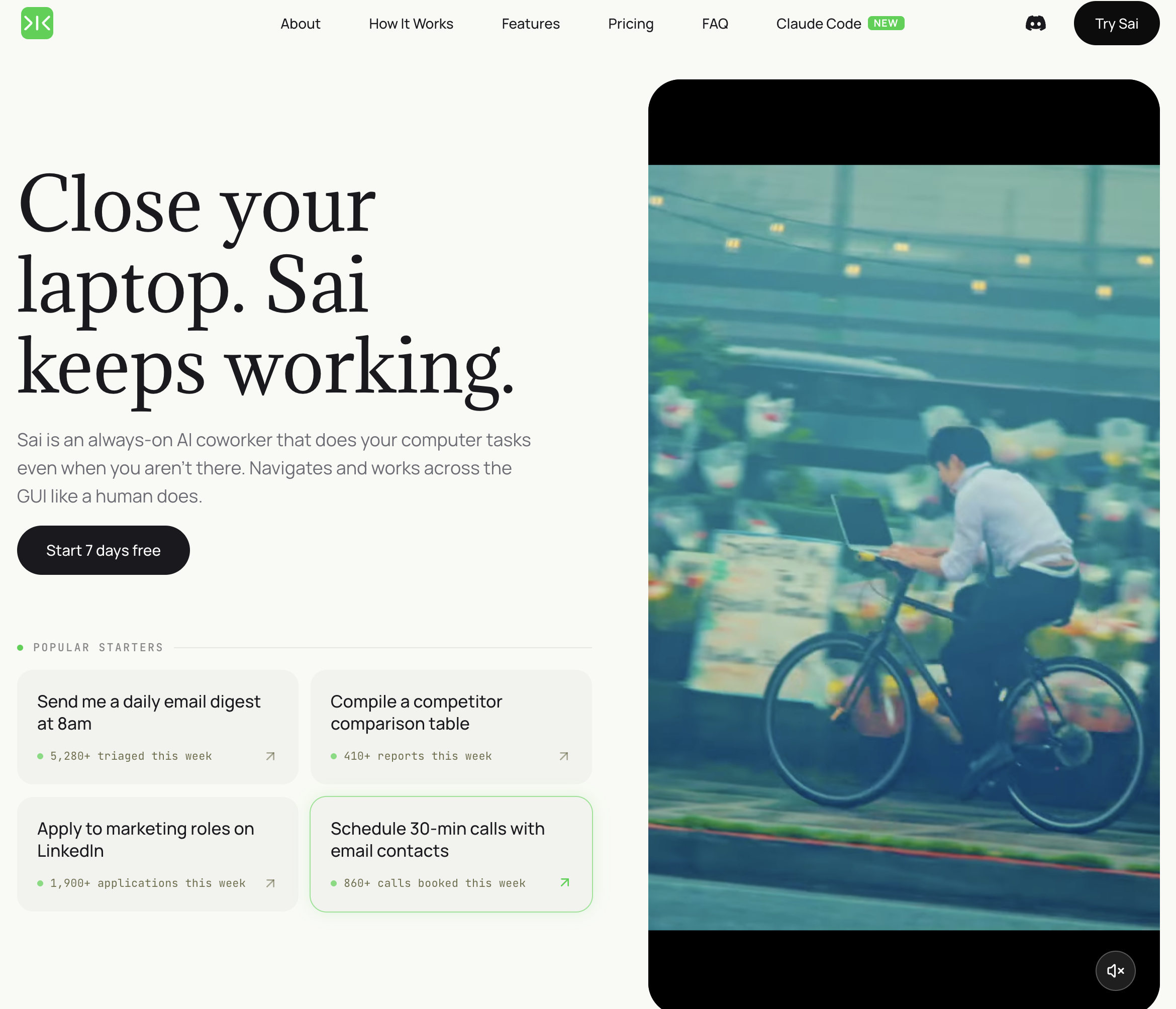
Most “best ai for b2b lead generation” tools live in your browser. Simular Pro lives on an entire computer.

Think of it as an always-on AI coworker that does your job when you’re not there. Simular’s agent uses your desktop the way you do: clicking, typing, operating the GUI across Chrome, Outlook, LinkedIn Sales Navigator, Excel, CRMs, and ad platforms. Under the hood it also speaks APIs, terminals, and code, so it can blend human-like UI work with precise programmatic actions.

Simular Pro runs on a private, cloud-based virtual desktop—your own remote machine that’s isolated, secure, and always on. You just connect from the laptop or tablet you already own, give the agent a playbook ("Find 50 ICP-fit accounts, research decision-makers, enrich them, draft emails, update the CRM"), and watch it work.

Technically, it’s built as a highly capable agent that can automate nearly everything a human can do across the desktop environment. Neuro-symbolic reasoning and reinforcement learning make it far more repeatable than LLM-only agents, and every action is transparent: you can read, inspect, and modify the steps. Guardrails mean the agent double-checks with you before sensitive actions—no surprise contract sends or bulk deletions.

For B2B lead gen, that means Simular Pro can own end-to-end workflows: scraping conference attendee lists, cleaning data in Sheets, pushing into your CRM, spinning up personalized sequences in your outreach tool, and logging activity—without you stitching five different UIs together.

Pros

  • True autonomous computer agent across desktop, browser, and cloud
  • Production-grade reliability for thousands to millions of steps
  • Transparent execution with human-in-the-loop checkpoints
  • Ideal for agencies, RevOps, and founders who want SDR-like coverage without extra headcount

Cons

  • Requires a bit of upfront workflow design to get the most value
  • Best suited to teams ready to standardize repeatable GTM processes

Pricing is customized based on seats and workload, but the value prop is simple: replace hours of manual computer work with a reliable agent that never gets tired.

2. Amplemarket – Lead Gen + Outbound in One Browser

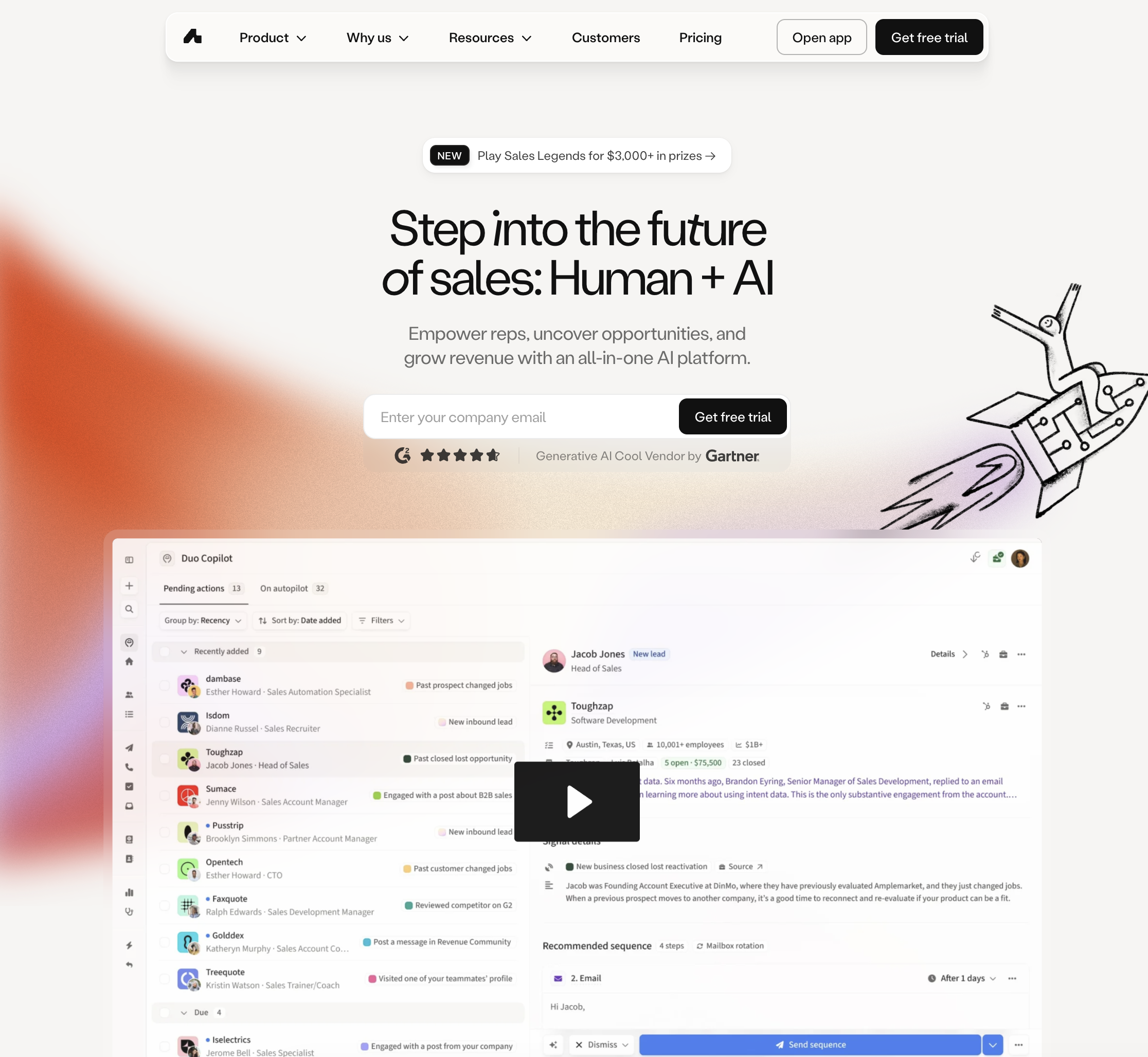
Amplemarket is a staple in many "best ai for b2b lead generation" lists, and for good reason. It combines B2B data, intent signals, enrichment, and multichannel outbound into one browser-based platform. Its AI sales copilot, Duo, helps reps surface in-market contacts, research accounts, and spin up sequences without tab-hopping.

Where it shines

  • Strong for SDR teams that live in email and LinkedIn
  • Good balance of data, intent, and outreach in a single UI
  • Duo copilot reduces manual research and copywriting

Trade-offs

  • Not a full autonomous agent; it augments humans inside the tool rather than running your wider stack
  • Browser-only: can’t operate your desktop spreadsheets, slide decks, or native CRM apps
  • Pricing is quote-based and can feel heavy for very small teams or agencies with many client workspaces

If your core problem is fragmented outbound—not messy internal workflows—Amplemarket is a solid alternative. But if you want an AI coworker that also cleans lists in Excel, files PDFs, and moves data between SaaS and desktop, you’ll feel its limits.

3. Demandbase – Enterprise ABM and Intent Intelligence

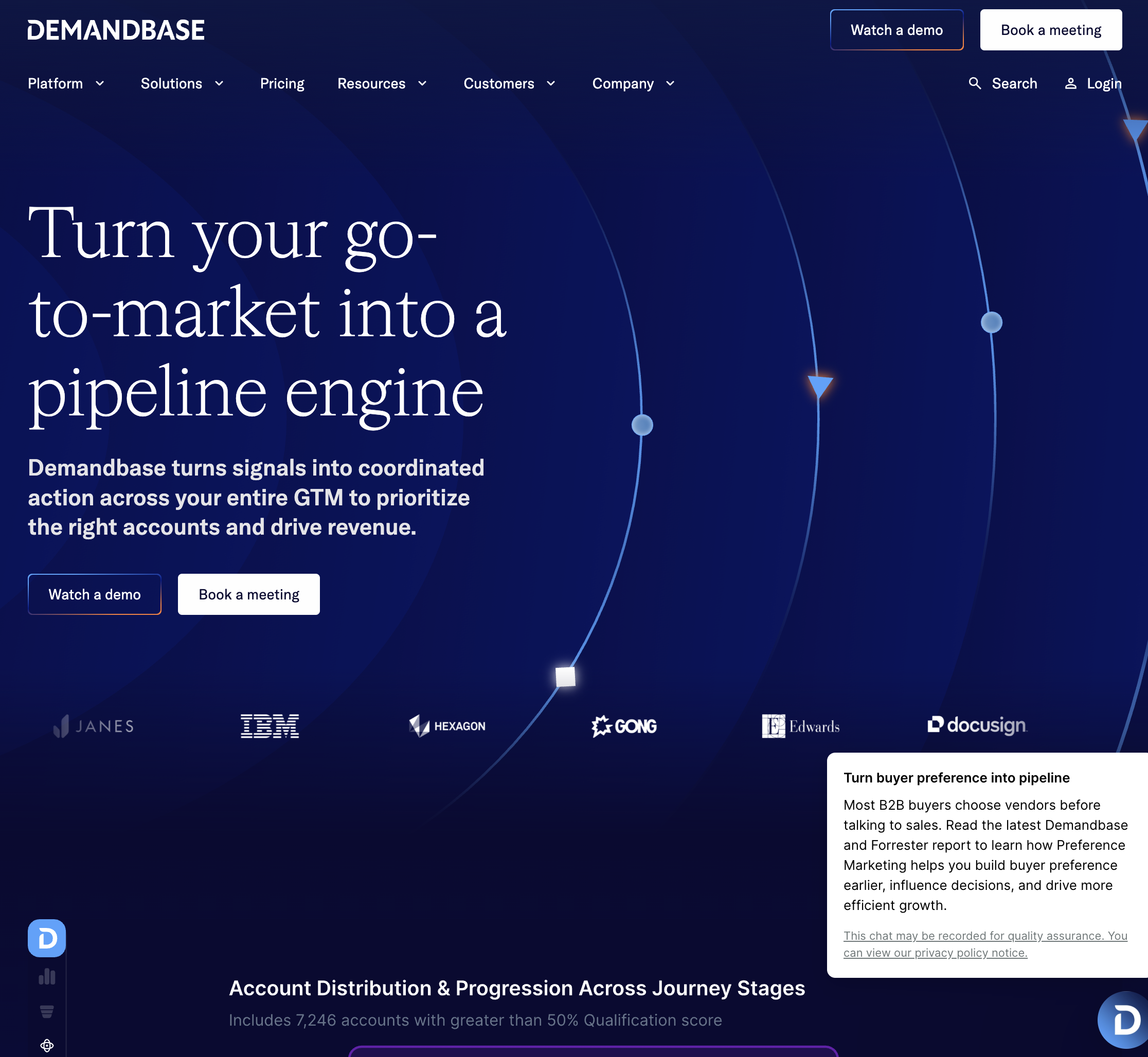
Demandbase isn’t an "agent" in the Simular sense; it’s an enterprise ABM platform with deep account intelligence. It analyzes firmographic, technographic, and behavioral data to identify high-value accounts, score their likelihood to convert, and orchestrate personalized advertising and outreach.

Where it shines

  • Excellent at answering: "Which accounts should we care about right now?"
  • Rich dashboards and analytics for marketing, sales, and RevOps
  • Tight integrations with CRMs and marketing automation platforms

Trade-offs

  • Focused at the account level; you still need tools or humans to find and engage the right people inside those accounts
  • No real autonomy—Demandbase advises and orchestrates, but doesn’t click through your tools or execute workflows on its own
  • Enterprise pricing and implementation overhead can be overkill for lean teams

Demandbase is a powerful radar for who’s in-market. But you’ll still need either people or an agentic platform like Simular Pro to turn those insights into executed, cross-app workflows.

4. Seamless.ai – Real-Time B2B Contact Data

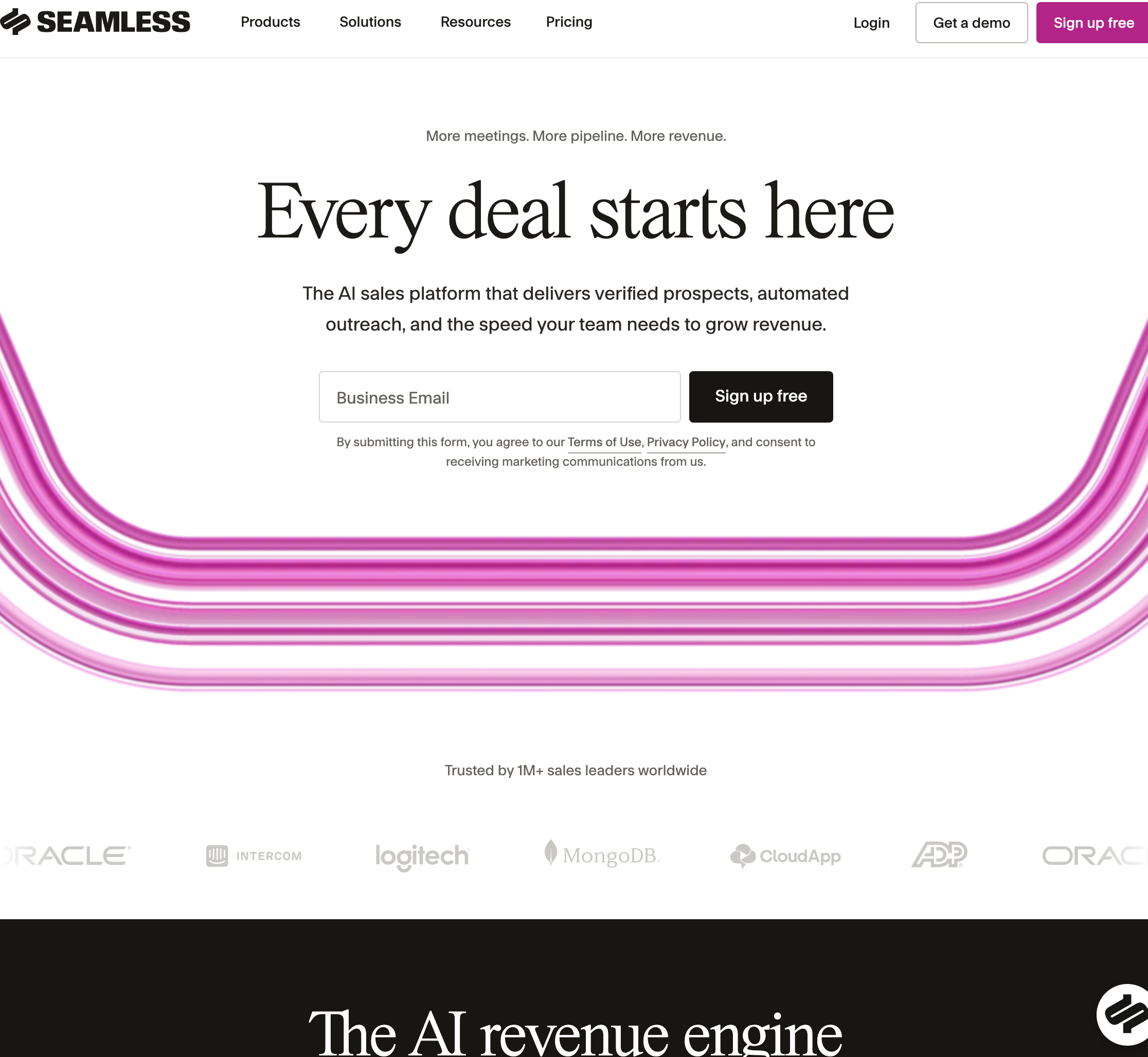
Seamless.ai is best known as a contact data workhorse. It helps you find phone numbers and emails for prospects, enrich existing records, and sync clean data into CRMs and sales engagement platforms.

Where it shines

  • Solid coverage for B2B contacts across many industries
  • Helpful Chrome extensions for grabbing leads from LinkedIn and company sites
  • Strong fit for teams that already have an outbound engine but need more/better data

Trade-offs

  • Not an autonomous system: it powers your workflows but doesn’t run them
  • Primarily browser and API-based; no ability to automate desktop processes
  • Costs scale with contact volume, which can add up fast for high-velocity outbound

Paired with Simular Pro, Seamless.ai becomes a data source your agent can use—automating the grunt work of list building, enrichment, and CRM hygiene while the agent handles everything else around it.

5. Gumloop – Flexible AI Workflow Automation

Gumloop sits closer to the automation side of the spectrum. It lets you design AI-powered workflows and agents that move data between tools like your CRM, email platform, Slack, and B2B databases. Many go-to-market teams use it to automate prospecting, enrichment, and follow-up.

Where it shines

  • Versatile templates for GTM automations
  • Strong API and SaaS integrations; good for data-rich teams
  • Ideal for ops-minded users who like tinkering with workflows

Trade-offs

  • Mostly browser/API scoped; it doesn’t natively "use" your computer UI
  • Requires more configuration than plug-and-play lead gen tools
  • Best for teams comfortable thinking in terms of triggers, actions, and data flows

Gumloop is a great choice if your systems already live in the browser and APIs and you want to weave them together. When you also need an agent to click around native desktop apps or bridge messy, human-centric workflows, Simular Pro covers that last mile.

6. Other Contenders and How to Choose

Beyond these five, there’s a long tail of best ai for b2b lead generation contenders: data providers like Cognism, marketing clouds like Salesforce and HubSpot, and free tools like Leadfeeder, Mailchimp, and Intercom, highlighted in resources from Demandbase, Amplemarket, and Leadpages.

They all do pieces of the puzzle—data, scoring, email, chat, ads. The real question is: do you want more specialized tools, or an AI coworker that sits above them and actually does the computer work?

If you’re a small team, agency, or growing B2B company, Simular Pro is designed to be that coworker: a transparent, guardrailed desktop agent that can read your playbook and run the steps, day after day. You keep control of the strategy and the sensitive decisions; Simular handles the clicking, typing, and tab juggling.

Try Simular when you’re ready to move from "yet another AI tool" to an agent that actually logs into your stack and gets the work done.

Stop doing repetitive tasks. Let Sai handle them for you.

Sai is your AI computer use agent — it operates your apps, automates your workflows, and gets work done while you focus on what matters.

Try Sai

FAQS