Oops! Something went wrong while submitting the form.
6 Best Super Intelligence Agents for Work in 2026
What is a super intelligence (SI) agent for work?
A super intelligence (SI) agent for work is software that takes a goal, operates the apps needed to reach it, and hands back the finished result. Unlike a chatbot, it acts on the screen or through tools rather than only generating text.
Focused on knowledge operations rather than large-scale software engineering.
Founders, ops teams, and enterprise digital workers.
Anthropic Computer Use
API-level multimodal computer control reference implementation.
High baseline reasoning; flexible raw primitives for custom software engineering.
Developer API only; lacks out-of-the-box persistent workspaces, vault, or routine schedulers.
Engineering teams building custom internal wrappers.
Cognition Devin
Sandboxed autonomous development environment (IDE, terminal, browser).
Deep code architecture refactoring; automated PR creation; debugging workflows.
High cost ($500+/mo); narrow specialization strictly limited to coding tasks.
Software engineering teams and dev backlogs.
OpenAI Operator
Browser-based visual web navigation agent.
Consumer web navigation; e-commerce checkout assistance; public site data gathering.
Restricted to web browsers; cannot control native desktop OS apps (Excel, ERPs).
Lightweight personal web research and consumer shopping.
Microsoft Copilot Studio
Low-code enterprise bot builder combining Power Automate RPA with LLM routing.
Native Microsoft 365 integration; enterprise compliance and Active Directory access.
Brittle RPA connectors; breaks upon minor UI changes; heavy setup overhead.
Enterprises locked into standard Microsoft ecosystems.
CrewAI / LangGraph
Open-source Python frameworks for orchestrating multi-agent state machines.
Infinite customization; full control over model selection and step logic.
Requires dedicated developers; no native GUI grounding or managed runtime environment.
Technical teams building deterministic multi-step pipelines.
1. Sai by Simular — best overall for office work
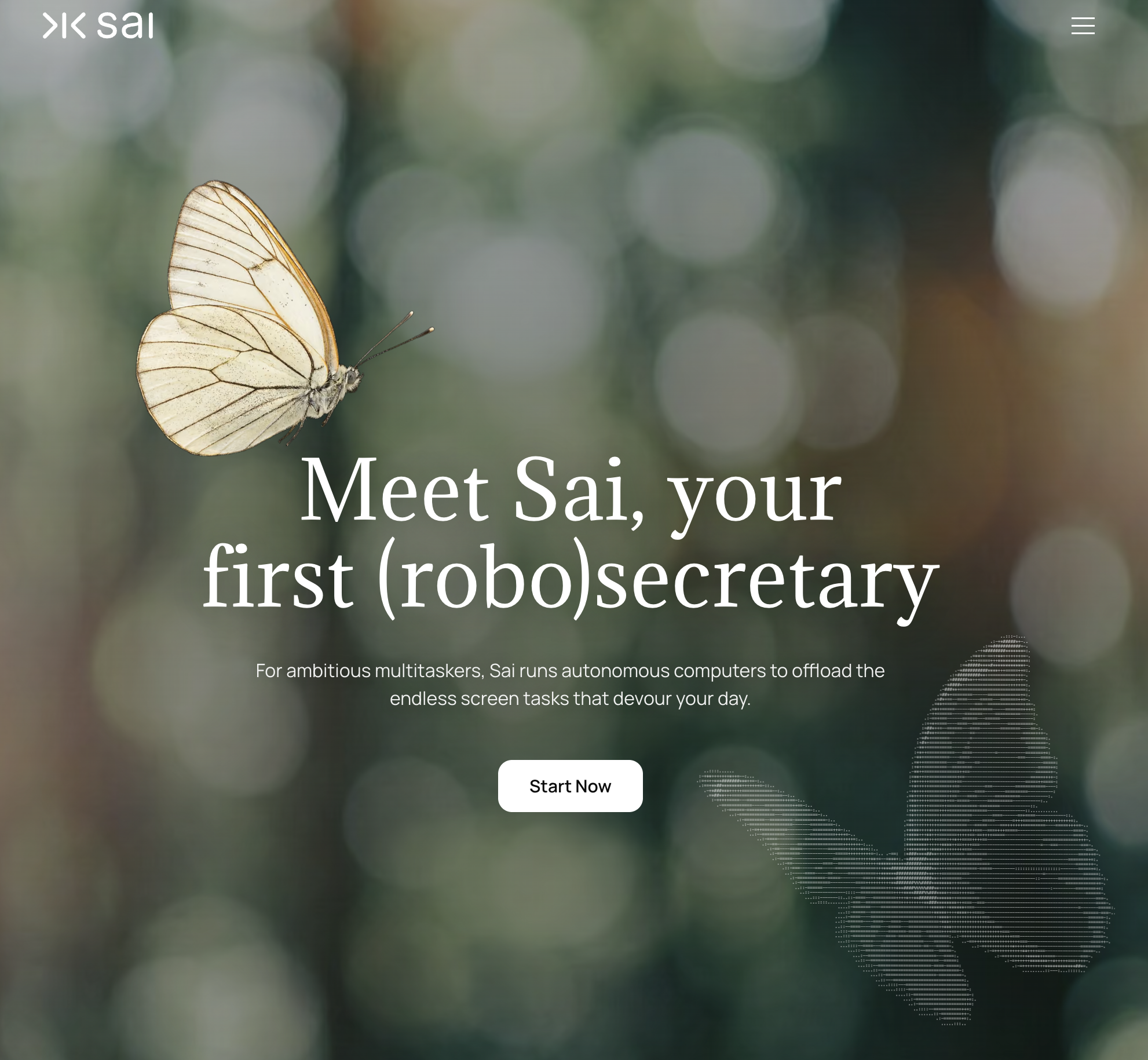
Sai is a robosecretary: a computer-use agent that runs a fleet of autonomous computers and hands back finished tasks. It works in desktop apps, browsers and internal portals, including tools with no API.
Reliability: Simular reports a 73.0% partial score on OSWorld 2.0 at $15.70 per task, ahead of Claude Opus 5 Max Thinking (70.6%) and GPT-5.6 Sol Max (62.6%). Its open-source Agent S framework reported 72.6% on OSWorld 1.0, above the 72.36% human baseline.
Cost on repeat work: Sai learns a procedure once with a model, then replays it as code. Simular reports 90%+ fewer tokens on repeated tasks, and the routine self-heals when the screen changes.
Autonomy: runs 24/7 in the cloud, turns repeated tasks into routines, and texts you when work is done (launch post). It can also run Claude Code sessions on a cloud desktop.
Governance:Sai for Enterprise lists SOC 2 Type II, HIPAA, zero data retention, bring-your-own-key encryption, and guardrails that pause before any irreversible action. It runs on Entra-joined, Intune-managed Cloud PCs via Windows 365 for Agents.
Watch out for: long tasks remain hard for every agent; Sai's binary full-task success on OSWorld 2.0 is 28.25%.
2. Anthropic computer use tool — best for developers building their own agent
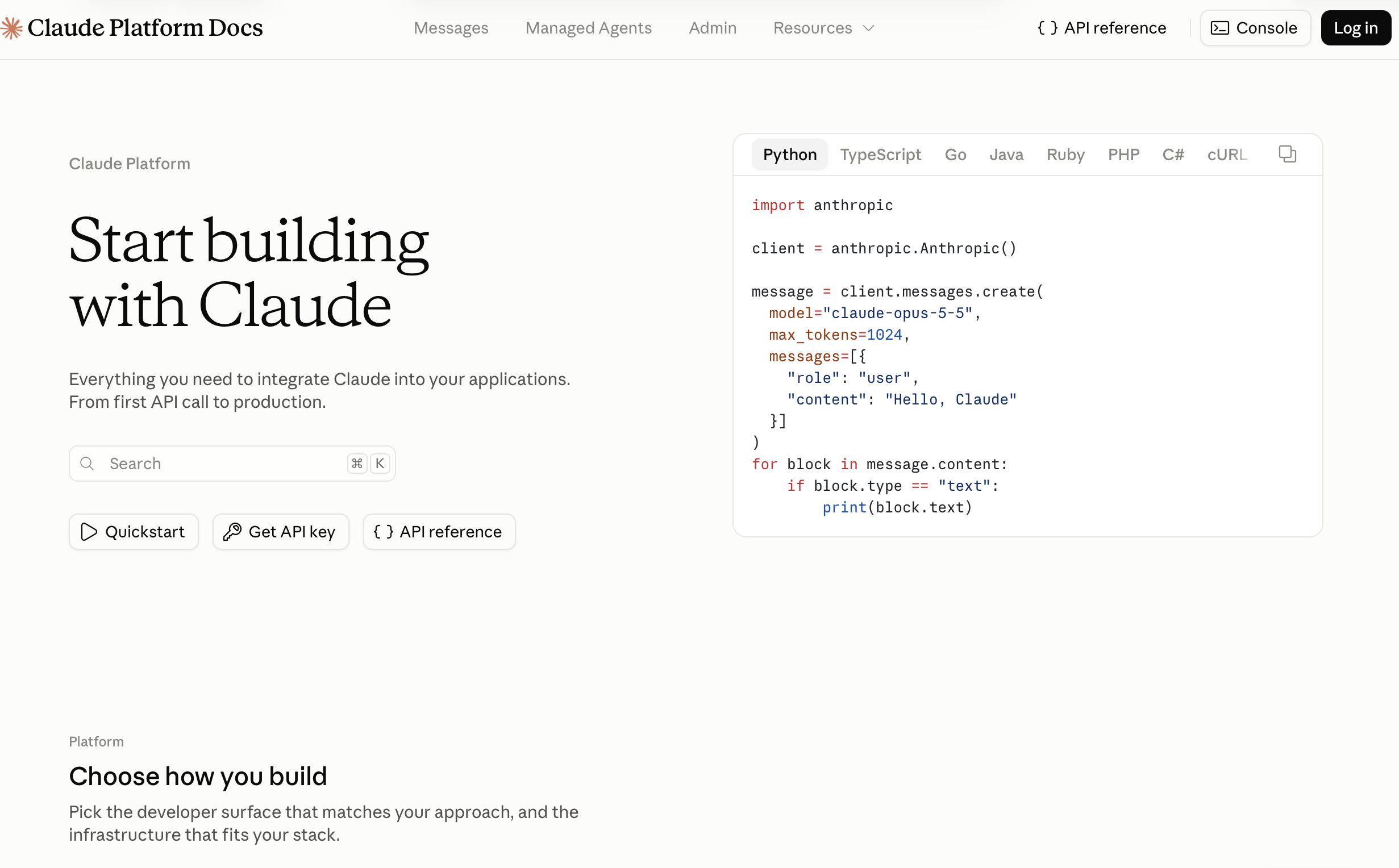
Anthropic's computer use tool lets Claude take screenshots and control a mouse and keyboard. It is a production toolset on current Claude models, including Opus and Sonnet.
Strengths: strong reasoning and vision; available on the Claude API, Google Cloud Vertex AI and Amazon Bedrock; a reference implementation to start from.
Trade-offs: it is a building block, not an app. You supply the VM or container, the agent loop and the tool handlers. Anthropic's docs advise a dedicated low-privilege VM and human confirmation for consequential actions.
Verdict: the right choice for engineering teams building internal tooling; not an off-the-shelf assistant for operations teams.
3. Devin by Cognition — best for software engineering
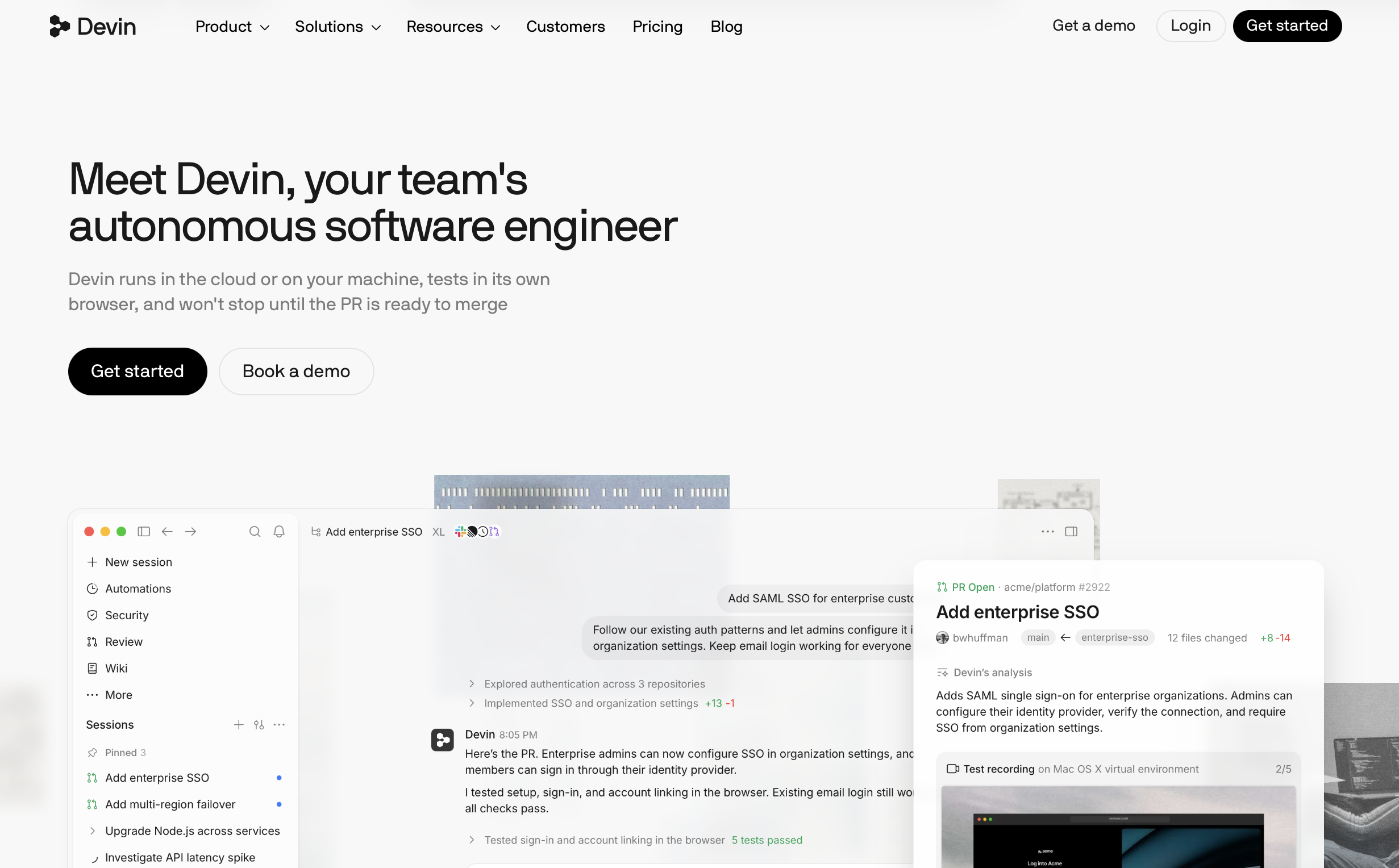
Devin describes itself as "your team's autonomous software engineer." It plans, codes, tests in its own browser and opens pull requests.
Strengths: end-to-end coding workflows; integrations with GitHub, Jira, Linear, Slack and Teams.
Trade-offs: built for engineering work, not CRM updates, invoice processing or legacy desktop apps.
Verdict: the specialist for code. For non-engineering desktop work, pair it with a computer-use agent.
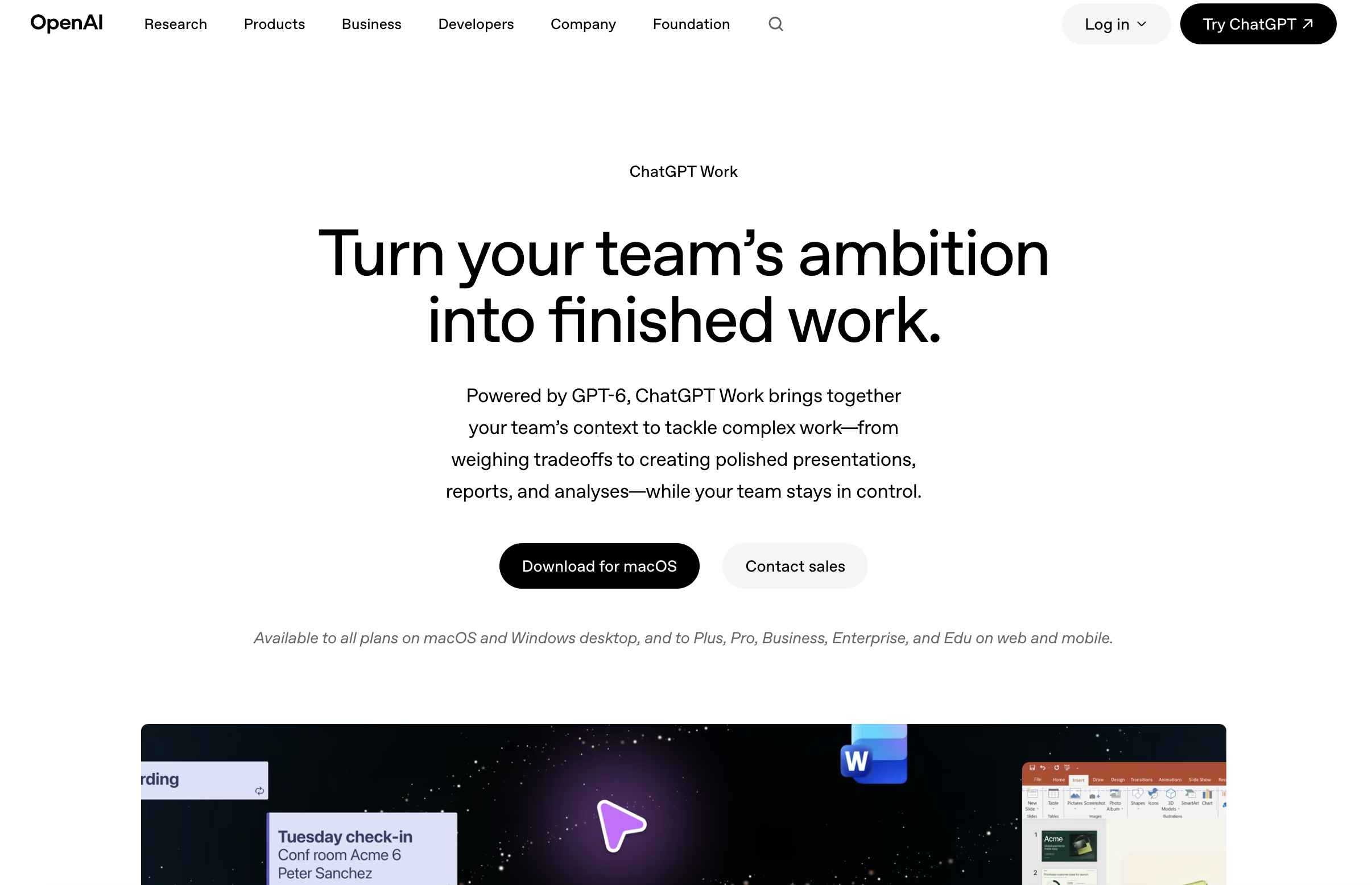
4. ChatGPT Work by OpenAI — best inside ChatGPT
OpenAI's agent line has changed twice. Operator launched in January 2025 and was folded into ChatGPT agent, with the standalone site shut down on August 31, 2025 (OpenAI). On July 9, 2026, OpenAI launched Work, "an agent for longer, more involved tasks."
Strengths: research, analysis, documents, presentations, spreadsheets, connected apps, scheduled tasks and browser use, inside the ChatGPT you already have.
Trade-offs: centered on ChatGPT and the browser. Developers who need desktop control use OpenAI's separate computer use API and build their own environment.
Verdict: a strong default for knowledge work that stays in documents and the web.
5. Microsoft Copilot Studio — best for Microsoft 365 shops
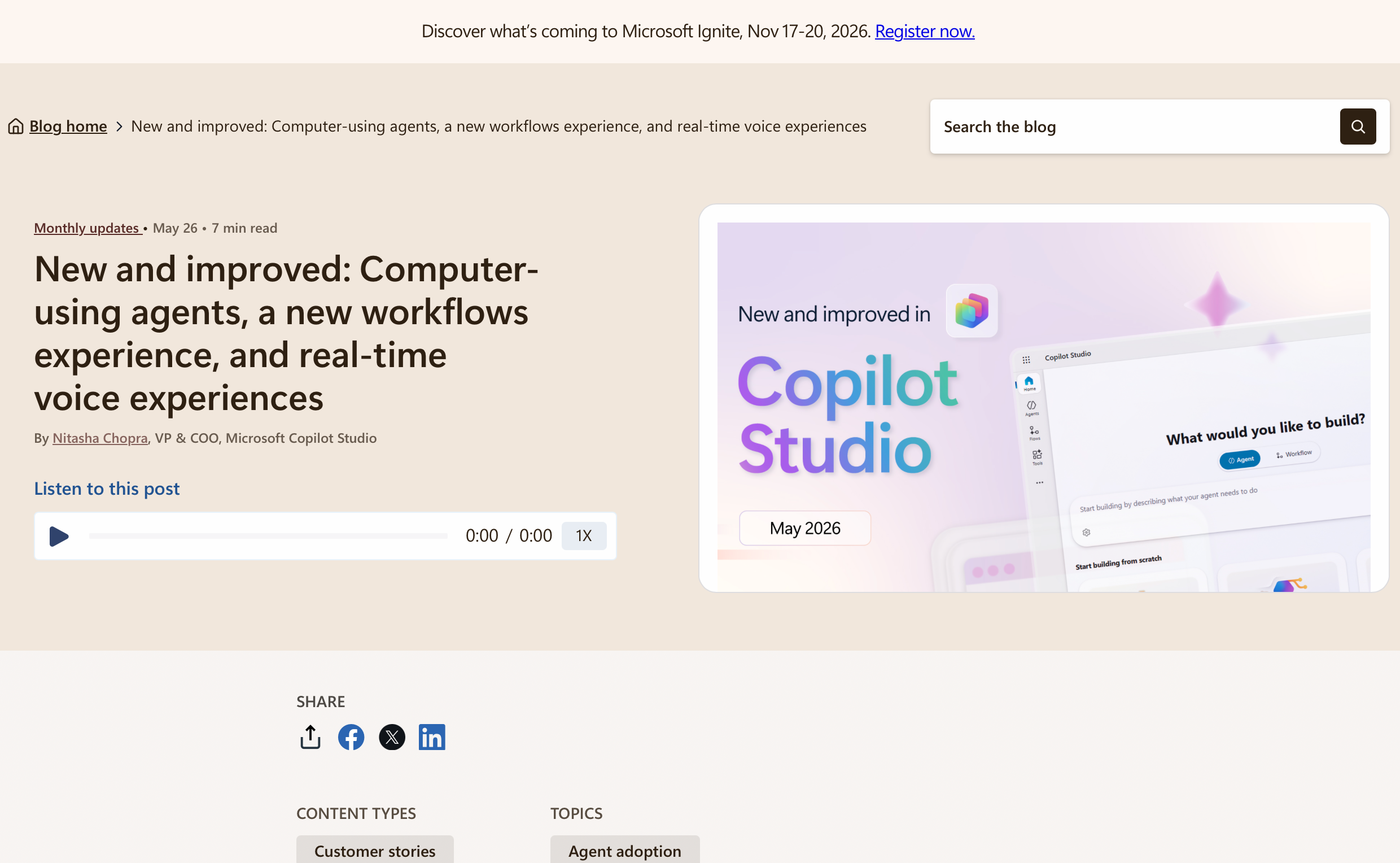
Copilot Studio is Microsoft's low-code agent builder. Computer-using agents, which operate websites and desktop apps through the UI, became generally available in May 2026.
Strengths: Microsoft 365, Teams and Entra integration; secure credential management; model choice; workflows that mix UI steps, API calls and approvals (workflow integration in preview).
Trade-offs: most value comes inside the Microsoft stack; building and maintaining agents is a low-code project for your team.
Verdict: a natural fit if you already standardize on Microsoft.
6. CrewAI and LangGraph — best for custom multi-agent pipelines
CrewAI and LangGraph are frameworks for building your own agent systems. LangGraph is an MIT-licensed, low-level orchestration library, deployed with LangSmith. CrewAI organizes agents into crews and flows, with a hosted CrewAI Platform.
Strengths: full control over roles, state, memory and human-in-the-loop steps.
Trade-offs: code libraries, not desktop workers. GUI control means wiring in a computer-use tool yourself, and every integration is yours to maintain.
Verdict: best for engineering teams building backend pipelines.
What makes an SI agent work-ready
1. Reliability on long tasks, not demo speed.
Small error rates compound: 98% per-step accuracy over 20 steps gives about 67% end-to-end success (0.98^20). Look for results on long-horizon benchmarks such as OSWorld 2.0, where tasks take a human about 1.6 hours, and check repeat-run reliability, not one lucky run (Simular on pass^k).
2. GUI reach without API dependencies.
Much business software has no API or charges for access. A work-ready agent operates the interface itself, the one interface every app has.
3. Isolation, credential protection and approvals.
Run agents in a dedicated, managed workspace, not on an employee's personal desktop. Anthropic's computer use docs advise a low-privilege VM, keeping login credentials away from the model where possible, and human confirmation for consequential actions.
Stop doing repetitive tasks. Let Sai handle them for you.
Sai is your AI computer use agent — it operates your apps, automates your workflows, and gets work done while you focus on what matters.